Source FTTH Optical Fiber Testing OTDR for Network Deployment
Find 30 FTTH optical fiber testing OTDR units from verified suppliers. Compare dynamic ranges, wavelengths, and blind zones for FTTH, FTTx, and FTTB network applications to ensure reliable deployment.
Key considerations
Products List


$900.00 - $1000.00
Moq: 1


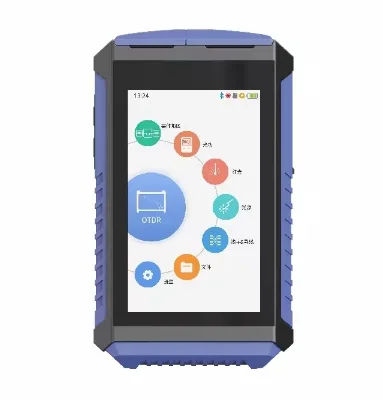


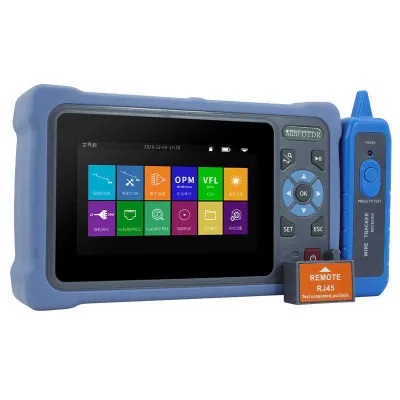
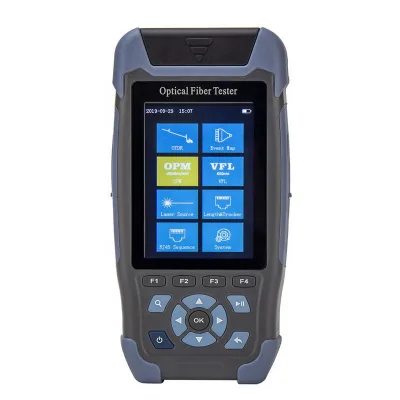
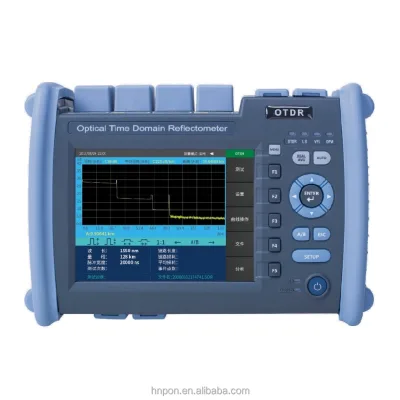
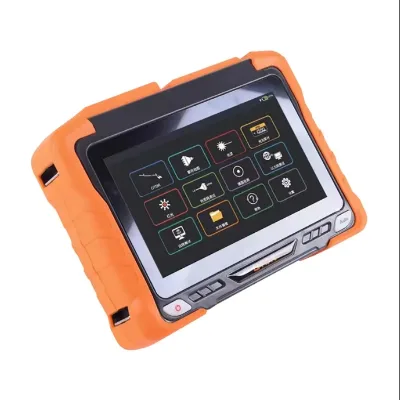
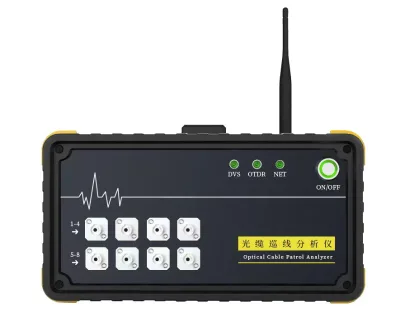
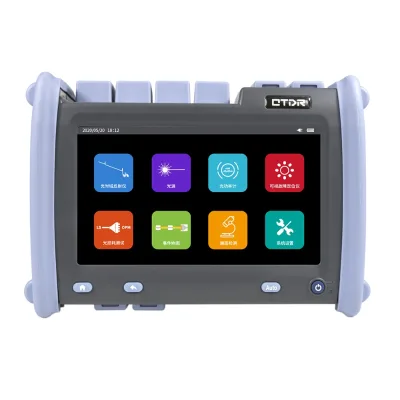


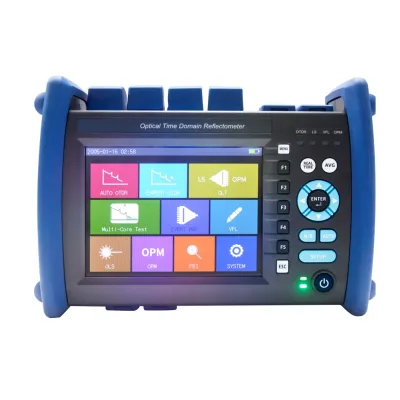


Comprehensive Sourcing Guide
Strategic Sourcing Guide for FTTH Optical Fiber Testing OTDR Solutions
The global expansion of Fiber to the Home (FTTH) and Fiber to the x (FTTx) networks has created an imperative demand for precise, reliable, and efficient Optical Time Domain Reflectometer (OTDR) testing equipment. For procurement professionals managing infrastructure projects, selecting the right OTDR is not merely a transactional decision but a strategic investment in network integrity. This guide synthesizes verified product attributes, technical specifications, and compliance requirements to provide a disciplined framework for sourcing optical fiber testing instruments. Buyers must navigate a market where specifications such as wavelength, dynamic range, and event blind zones directly correlate with the success of network deployment and maintenance.
Technical Specifications and Performance Metrics
When evaluating OTDR units for FTTH applications, the primary focus must be on the device's ability to accurately characterize fiber links. The core technical parameters define the instrument's utility in real-world scenarios. A critical specification is the operating wavelength. In the context of single-mode fiber networks, the industry standard typically revolves around 1310 nm and 1550 nm. Verified product data indicates that specific models are engineered to operate within these precise bands, with some units offering a broader spectral range from 700 nm to 1700 nm to accommodate various testing needs. Procurement teams should verify that the selected unit supports the specific wavelengths required by the network architecture, as mismatched wavelengths can lead to inaccurate loss measurements.
Another pivotal metric is the dynamic range, which determines the maximum distance the OTDR can measure. The observed market data presents a variance in this specification, with units offering dynamic ranges of 22 dB, 24 dB, and up to 32 dB. A higher dynamic range is essential for long-haul fiber deployments, whereas lower ranges may suffice for short-reach FTTH drop cables. Buyers must align the dynamic range requirement with the specific length of the fiber spans they intend to test. For instance, a unit with a 24 dB range is suitable for specific applications, while a 32 dB unit offers extended reach capabilities.
The resolution of the device is equally critical for identifying faults in dense networks. Specifications such as the Event Blind Zone and Attenuation Blind Zone dictate the minimum distance between two events (such as a connector and a splice) that the device can distinguish. Data indicates that certain models feature an Event Blind Zone of 3 meters and an Attenuation Blind Zone of 13 meters. These figures are vital for testing in environments with closely spaced components, such as distribution frames. Furthermore, the linearity of the measurement, observed at 0.05 dB/dB, and the loss resolution ratio of 0.01 dB, ensure that small losses are detected accurately. Procurement specifications should explicitly require these resolution metrics to guarantee high-fidelity testing results.
Compliance, Certification, and Regulatory Standards
In the B2B procurement of electronic testing equipment, compliance is non-negotiable. Buyers must ensure that suppliers provide documentation verifying adherence to international safety and quality standards. The supplied product facts highlight a consistent presence of CE certification and ISO standards across various models. Specifically, ISO 9001 and ISO 9000 are frequently cited as quality management standards, while CE marking indicates conformity with health, safety, and environmental protection standards for products sold within the European Economic Area.
Beyond general certifications, specific regulatory compliance such as RoHS (Restriction of Hazardous Substances) is observed in certain product lines. This is particularly relevant for procurement in regions with strict environmental regulations. Additionally, SGS certification appears as a verification of product quality and safety. When evaluating potential suppliers, buyers should request current certificates for CE, ISO 9001, and RoHS. It is important to note that while some product listings mention standards like IEC 14763-3, this should be treated as background information rather than a guaranteed attribute of every unit unless explicitly confirmed by the supplier.
The verification process should also include checking for the specific standard codes listed on the product datasheet. For example, some units list a combination of CE, SGS, CSI, and ISO9000. Procurement teams must ensure that the certificates provided match the specific model number being ordered, as compliance can vary between product generations. The absence of these certifications in a supplier's documentation should be a red flag, potentially indicating non-compliant manufacturing practices or outdated inventory.
Cost Drivers and Procurement Economics
The pricing structure for OTDR equipment is influenced by a complex interplay of technical capabilities, build quality, and market positioning. The observed price range in the market spans from approximately $0.50 to $3,500 USD. This vast disparity suggests that the market includes both low-cost accessories or basic modules and high-end, fully featured handheld or benchtop units. The higher price points are typically associated with advanced features such as extended dynamic ranges, larger memory capacities, and robust durability features like hard carrying cases.
Minimum Order Quantity (MOQ) is another significant economic factor. The observed MOQ range varies from 1 unit to 1,000 units. For small-scale projects or pilot deployments, suppliers offering an MOQ of 1 are essential for flexibility. Conversely, large-scale infrastructure projects may benefit from suppliers with higher MOQs, which often come with volume discounts. Buyers must balance the upfront cost against the total cost of ownership, considering factors like maintenance, software updates, and the longevity of the device.
Lead times also impact the overall procurement cost and project timeline. Verified data indicates a delivery time of 5 to 7 days for certain models. However, this can vary based on the supplier's location and inventory status. Products originating from Nanjing or Guangdong, China, may have different logistical profiles compared to other regions. Procurement planners should account for these lead times when scheduling network deployment phases to avoid delays.
Typical Applications and Operational Context
OTDRs are indispensable tools in the deployment and maintenance of FTTH, FTTx, and FTTB networks. The primary application involves verifying the continuity and quality of fiber optic cables after installation. The specific attribute of "Applicable Fiber" being 1310/1550 nm confirms the device's suitability for standard single-mode fiber (G.652) used in these networks. The ability to test a range from 10 meters to 60 kilometers makes these units versatile for both short-distance drop cables and long-distance trunk lines.
The operational context often requires portability and ease of use. Attributes such as "Integrated Wiring" and "New" condition suggest that modern OTDRs are designed for field technicians who need reliable, ready-to-use equipment. The inclusion of features like a 10-second splice time and 30-second heat time indicates compatibility with fusion splicing workflows, allowing technicians to test and splice in a continuous loop. Furthermore, the memory capacity of the trace, noted as SD Card (4G) capable of storing over 10,000 pieces of data, is crucial for maintaining a digital record of network tests. This data storage capability supports long-term network documentation and troubleshooting.
Supplier Evaluation and Origin Verification
Selecting a reliable supplier requires a rigorous evaluation of their origin and manufacturing capabilities. The supplied data points to specific production locations, including Nanjing, China, and Guangdong, China. While these regions are known for electronics manufacturing, buyers must verify the specific factory credentials. The "Brand Name" field often lists "OEM," indicating that many products are manufactured under contract for various brands. This necessitates a deeper dive into the actual manufacturer's reputation rather than relying solely on the brand name on the packaging.
When evaluating suppliers, buyers should request proof of origin and manufacturing standards. The presence of specific model numbers like T-OT560-A24D, T-OT750-M26, and T-OT750-S-A32 allows for precise tracking of product specifications. Buyers should ensure that the model number on the purchase order matches the model number on the certification documents. Additionally, the "Product Name" and "Model Number" should be consistent across all documentation to avoid confusion during customs clearance and installation.
Quality Control and Long-Term Procurement Considerations
Quality control extends beyond the initial purchase to the long-term reliability of the equipment. The "Condition" of the product is listed as "New," which is a baseline expectation. However, buyers should also consider the physical durability of the unit. Packaging options such as "CTN" (Carton) or "Hard Carrying Case" indicate different levels of protection. For field technicians, a hard carrying case is often a necessary investment to protect the device from impact and environmental hazards.
Long-term procurement considerations include the availability of spare parts, software support, and calibration services. The "Use" attribute specifies FTTH, suggesting that the equipment is designed for this specific sector. Buyers should verify if the supplier offers ongoing support for the specific model, including firmware updates to support new fiber standards. The "Connector Type," observed as FC/PC with interchangeable SC and St options, highlights the need for compatibility with existing infrastructure. Procurement teams should ensure that the OTDR supports the connector types used in their specific network to avoid the need for additional adapters.
Finally, the "Test Curve" data storage capability of 1000 entries is a key feature for quality assurance. This allows for the retention of historical test data, which is essential for trend analysis and preventive maintenance. Buyers should verify that the device's interface allows for easy export of this data to standard formats for integration with network management systems. By focusing on these quality and longevity factors, procurement professionals can ensure that their investment in OTDR technology delivers sustained value over the lifecycle of the network.
Comparative Analysis of Key Specifications
To facilitate decision-making, the following table summarizes the key technical and compliance attributes observed in the market data. This comparison highlights the variability in specifications that buyers must navigate.
| Feature Category | Observed Specification Range | Critical Verification Point |
|---|---|---|
| Wavelength | 1310/1550 nm; 700 ~ 1700 nm | Ensure compatibility with network fiber type. |
| Dynamic Range | 22 dB, 24 dB, 32 dB | Match range to maximum fiber span length. |
| Blind Zones | Event: 3m; Attenuation: 13m | Verify suitability for dense component layouts. |
| Certifications | CE, ISO 9001, ISO 9000, RoHS, SGS | Request valid certificates for the specific model. |
| Memory Capacity | 1000 traces; SD Card (4G) >10,000 pieces | Confirm storage needs for project documentation. |
| Connector Type | FC/PC (Interchangeable SC, St) | Check compatibility with existing fiber infrastructure. |
| Origin | Nanjing, China; Guangdong, China | Verify manufacturer credentials and lead times. |
| Delivery Time | 5-7 Days | Align with project deployment schedules. |
This structured approach to sourcing ensures that buyers make informed decisions based on verified data rather than marketing claims. By rigorously checking specifications, certifications, and supplier origins, procurement teams can secure high-quality OTDR solutions that meet the demanding requirements of modern FTTH and FTTx network deployments.
FAQs
What certifications do fttx optical fiber testing otdr units typically have?
Most units carry CE and ISO certifications, with some models also including RoHS compliance. Specific models may list SGS or CSI standards alongside ISO 9001 or ISO 9000 quality management systems to ensure regulatory adherence.
Which wavelengths are supported by these optical fiber testing devices?
Standard models operate at 1310 and 1550 nanometers for single-mode fiber applications. Some advanced units offer a broader spectral range from 700 to 1700 nanometers to accommodate diverse testing requirements.
Can these devices store test curves and data for network documentation?
Yes, many units feature memory capacity for storing over 10,000 trace pieces on SD cards. Specific models support storing up to 1000 test curves directly, ensuring comprehensive record-keeping for maintenance.
How long is the delivery time for these optical testing instruments?
Verified delivery times for certain models range from 5 to 7 days. This lead time applies to units originating from manufacturing hubs in Nanjing or Guangdong, China, subject to current inventory levels.
What dynamic range options are available for long-distance fiber testing?
Available dynamic ranges include 22 dB, 24 dB, and up to 32 dB depending on the model. Higher ranges like 32 dB are suitable for extended reach capabilities in long-haul network deployments.
Which connector types are compatible with these OTDR testing equipment?
Devices typically feature FC/PC connectors that are interchangeable with SC and ST types. Some advanced interfaces support FC/Upc combined with Sc/APC to ensure broad compatibility with existing fiber infrastructure.